
Table of Contents
Artificial Intelligence (AI) is transforming industries across the globe, and healthcare is no exception. From AI-powered diagnostic tools to virtual nursing assistants, technology is becoming an integral part of modern healthcare systems. This rapid advancement has raised an important question among healthcare professionals and nursing students alike: Will AI replace nurses?
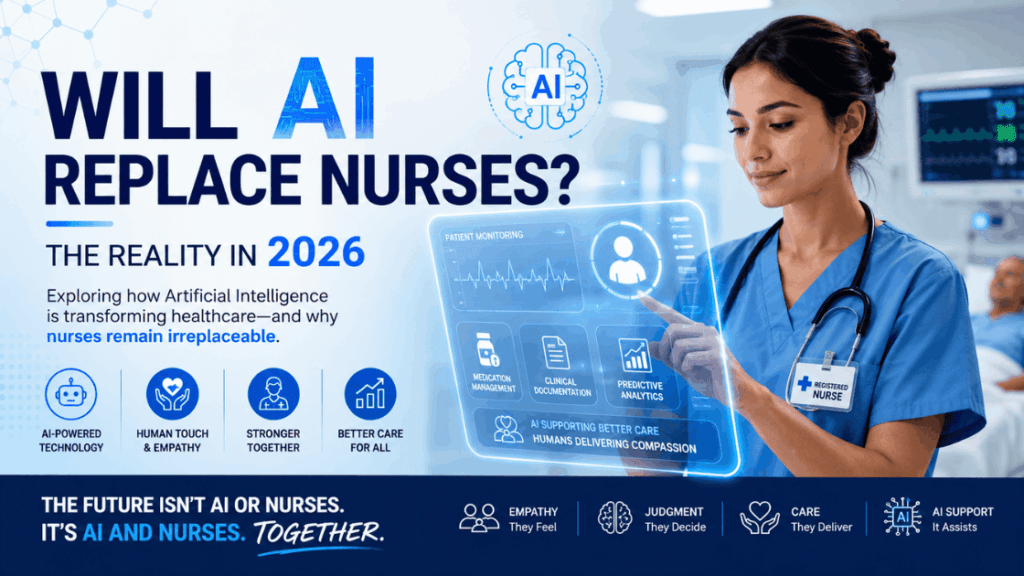
The short answer is no. While AI is changing the way nurses work, it is not replacing the human skills, empathy, and critical thinking that define the nursing profession. Instead, AI is becoming a powerful tool that helps nurses deliver better patient care while reducing administrative burdens.
The Growing Role of AI in Healthcare
In 2026, healthcare organizations worldwide are increasingly adopting AI-powered solutions to improve efficiency and patient outcomes. Hospitals use AI to assist with:
- Patient monitoring and early warning systems
- Medical imaging analysis
- Clinical documentation
- Medication management
- Predictive analytics for patient care
- Virtual health consultations
These technologies can process vast amounts of data quickly, helping healthcare providers make informed decisions. However, they are designed to support healthcare professionals—not replace them.
What AI Can Do Better Than Humans
AI excels at handling repetitive, data-driven tasks. For example, AI-powered systems can review patient records, identify potential health risks, and alert healthcare teams to changes in a patient’s condition.
Some key advantages of AI include:
Faster Data Analysis
AI can analyze thousands of patient records within seconds, identifying patterns that may be difficult for humans to detect.
Reduced Administrative Work
Documentation is one of the most time-consuming aspects of nursing. AI-powered charting and voice recognition systems can help reduce paperwork and allow nurses to spend more time with patients.
Improved Accuracy
AI tools can help minimize medication errors, monitor vital signs continuously, and provide evidence-based recommendations to support clinical decisions.
What AI Cannot Replace Nurses?
Despite its capabilities, AI lacks the qualities that make nurses indispensable in healthcare.
Human Empathy and Compassion
Patients often need emotional support during difficult times. Whether comforting a frightened patient before surgery or supporting a family through a medical crisis, nurses provide human connection that technology simply cannot replicate.
Critical Thinking in Complex Situations
Healthcare is rarely straightforward. Nurses constantly assess changing situations, interpret subtle patient cues, and make decisions based on clinical judgment and experience. AI can provide recommendations, but it cannot fully understand the complexities of human behavior and emotions.
Communication and Advocacy
Nurses act as advocates for their patients, coordinating care among doctors, specialists, and families. Effective communication requires emotional intelligence, cultural awareness, and interpersonal skills-areas where AI remains limited.
How AI Is Changing Nursing Careers
Rather than eliminating nursing jobs, AI is creating opportunities for nurses to focus on higher-value tasks.
In many healthcare settings, nurses are spending less time on documentation and more time on direct patient care. New career paths are also emerging, including:
- Virtual Nursing
- Nursing Informatics
- Telehealth Nursing
- Clinical Data Management
- AI-Assisted Care Coordination
Nurses who embrace technology and develop digital healthcare skills may find themselves in even greater demand in the coming years.
The Global Nursing Shortage Continues
One of the strongest reasons AI is unlikely to replace nurses is the ongoing global nursing shortage. Countries such as Australia, New Zealand, the United States, Canada, and the United Kingdom continue to face significant shortages of qualified nurses.
Healthcare systems are actively recruiting internationally qualified nurses to meet growing demand. As populations age and healthcare needs increase, the need for skilled nursing professionals is expected to remain strong throughout the next decade.
AI can help healthcare organizations manage workloads more efficiently, but it cannot fill the workforce gap on its own.
What Nurses Should Do to Stay Future-Ready
The future belongs to nurses who combine clinical expertise with technological literacy. To remain competitive in the evolving healthcare landscape, nurses should:
- Learn about AI and healthcare technology
- Develop digital documentation skills
- Explore telehealth and virtual care opportunities
- Stay updated on emerging healthcare trends
- Pursue continuous professional development
Understanding how AI works can help nurses leverage these tools to improve patient outcomes and advance their careers.
Final Thoughts
So, will AI replace nurses in 2026? The reality is that AI is not replacing nurses—it is transforming the profession.
AI can automate routine tasks, improve efficiency, and support clinical decision-making, but it cannot replace human compassion, critical thinking, communication, and patient advocacy. The future of healthcare is not about AI versus nurses; it is about AI working alongside nurses to deliver safer, faster, and more effective patient care.
For nursing professionals, this is not a threat-it is an opportunity. Nurses who embrace technology while continuing to provide the human touch that patients need will remain at the heart of healthcare for years to come.
Frequently Asked Questions(FAQ’s)
Will AI replace nurses in the future?
No. AI is designed to support nurses by automating routine tasks and improving efficiency. However, it cannot replace the human empathy, clinical judgment, and communication skills that nurses provide.
How is AI currently being used in nursing?
AI is being used for patient monitoring, clinical documentation, medication management, predictive analytics, virtual nursing support, and early warning systems that help identify patient deterioration.
Can AI provide patient care without nurses?
AI can assist with certain aspects of care, such as monitoring vital signs and analyzing patient data, but it cannot deliver holistic patient care, emotional support, or make complex clinical decisions independently.
What nursing jobs are most affected by AI?
Administrative and documentation-heavy tasks are being automated. However, bedside nursing, emergency care, critical care, and patient advocacy roles continue to require strong human involvement.
Will AI reduce the demand for nurses?
Current projections suggest the opposite. Many countries are facing severe nursing shortages, and AI is expected to help nurses manage workloads rather than reduce the need for nursing professionals.